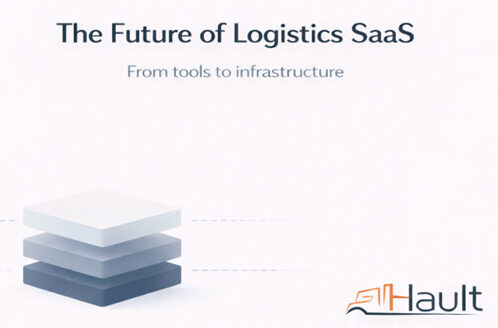
The Future of Logistics SaaS in India: From Tools to Infrastructure
December 31, 2025
The Future of Logistics SaaS in India
From Tools to Infrastructure
For years, logistics SaaS in India has focused on tools.
Tracking tools.
Reporting tools.
Driver apps.
Vendor systems.
These tools solved individual problems—but created fragmented operations.
The next phase of logistics SaaS is not about adding more tools.
It is about building infrastructure.
Why Tool-Based SaaS Is Reaching Its Limits
Point solutions worked when logistics operations were smaller.
As businesses scaled, tools created:
- Multiple systems
- Data silos
- Manual coordination between platforms
- Inconsistent visibility
Operations teams now spend time connecting tools instead of running logistics.
This model does not scale.
What “Infrastructure” Really Means in Logistics
Infrastructure is not just software.
It is a system that:
- Connects all operational actors
- Creates a shared source of truth
- Supports daily execution
- Absorbs complexity quietly
In logistics, infrastructure sits beneath operations—
like roads sit beneath transport.
The Shift From Features to Foundations
The future of logistics SaaS will be defined by:
- Fewer dashboards, more decisions
- Fewer integrations, more native workflows
- Less manual coordination, more automation
- Less enforcement, more adoption
Platforms will be judged not by what they show—but by what they remove.
Why India Needs Infrastructure-Level Platforms
Indian logistics is uniquely complex:
- Fragmented supply chains
- Informal vendors
- Variable infrastructure
- High dependency on human coordination
Infrastructure-level SaaS:
- Works with imperfect data
- Supports informal workflows
- Adds structure without rigidity
- Builds trust through clarity
This is not optional.
It is necessary for scale.
The Role of Trust in Future Logistics Platforms
Infrastructure creates trust by default.
When systems:
- Capture actions automatically
- Maintain transparent histories
- Reduce disputes
- Enable accountability
Trust becomes systemic—not personal.
This is critical for multi-party logistics ecosystems.
What This Means for Logistics Buyers
Buyers must stop asking:
“What features does this software have?”
And start asking:
- Can this become part of our operating backbone?
- Will this reduce coordination effort?
- Does this scale with complexity?
- Will this still work five years from now?
What This Means for SaaS Builders
SaaS builders must shift from:
- Feature shipping → system design
- User interfaces → behavior absorption
- Tool thinking → infrastructure thinking
The winners will build quietly powerful systems—not flashy products.
Final Thought
The future of logistics SaaS in India is not another tool.
It is infrastructure that:
- Holds operations together
- Scales trust
- Reduces friction
- Enables growth without chaos
The strongest platforms will feel invisible— because they work.
->
Explore how logistics platforms are evolving from tools into foundational infrastructure for Indian operations.
Related reading:
-
Logistics SaaS buyer’s guide
-
Scaling logistics operations
-
Choosing logistics software