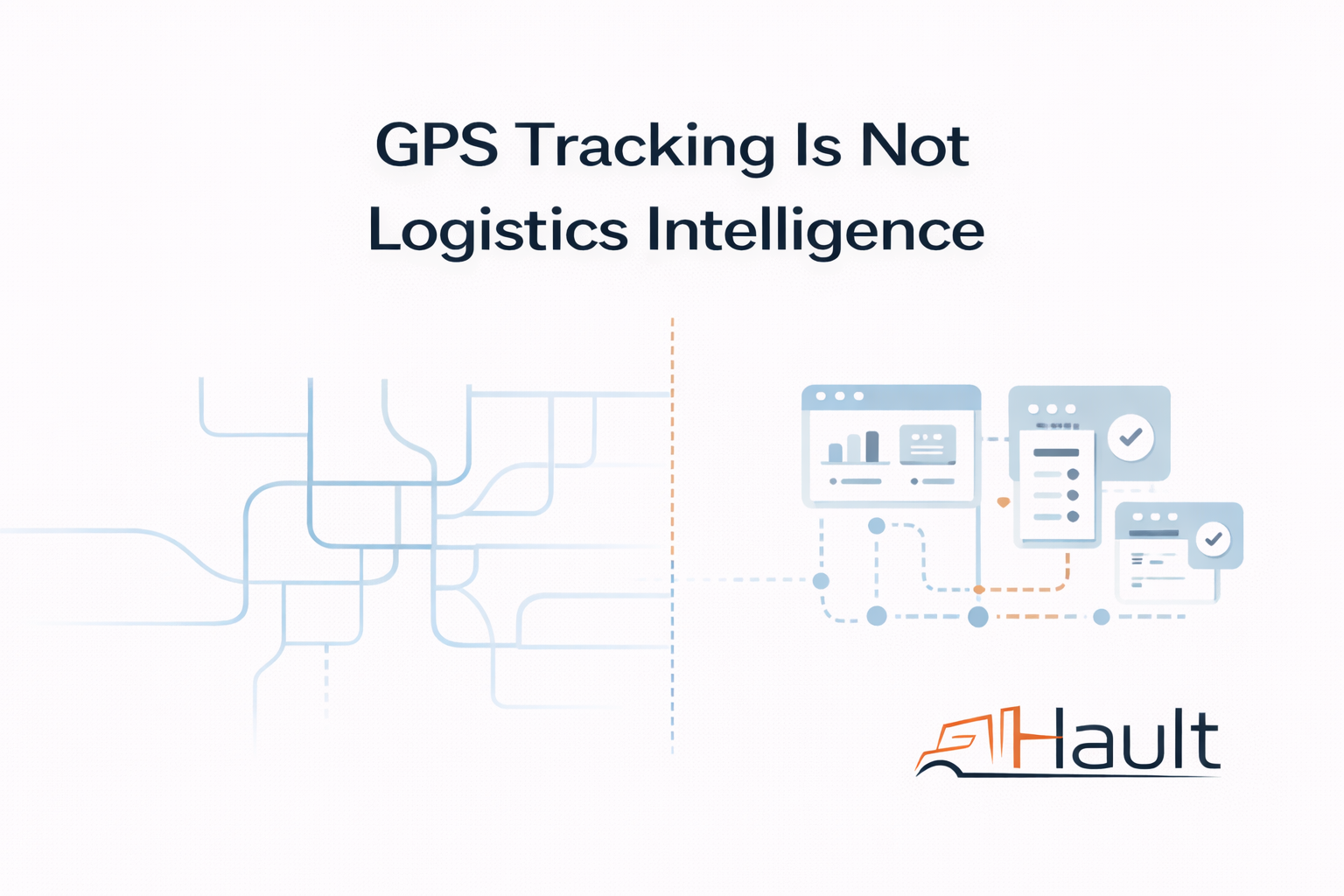
GPS Tracking Is Not Logistics Intelligence: Understanding the Difference
December 31, 2025
GPS Tracking Is Not Logistics Intelligence
Understanding the Difference
Many logistics buyers believe that once vehicles are GPS-tracked, operations are under control.
This assumption is common — and costly.
GPS tracking is useful, but it solves only one small part of the logistics problem.
Operational intelligence requires much more.
Understanding this difference is critical before investing in fleet or logistics software.
What GPS Tracking Actually Does Well
GPS tracking answers one question reliably:
“Where is the vehicle?”
It provides:
- Real-time location
- Route history
- Distance covered
- Idle time
- Basic alerts (geofence, speed)
For movement visibility, GPS works.
What GPS Tracking Does Not Solve
Logistics problems are rarely just about location.
GPS cannot tell you:
- Why a vehicle is delayed
- Whether loading or unloading has started
- If a driver followed instructions
- If documents were submitted
- If a vendor caused the delay
- Whether a job is actually complete
As a result, teams still rely on:
- Phone calls
- WhatsApp messages
- Manual follow-ups
The system shows movement — not meaning.
The Gap Between Tracking and Operations
Tracking systems show activity.
Operations require context.
Without context:
- Delays are unexplained
- Disputes are unresolved
- Accountability is unclear
- Decisions are reactive
This is where most logistics setups break down.
What Logistics Intelligence Actually Means
Logistics intelligence connects multiple layers:
- Vehicle movement
- Job status
- Driver actions
- Vendor inputs
- Operational timelines
Instead of asking:
“Where is the truck?”
It answers:
“What is happening, why, and what needs action?”
Why This Difference Matters for Buyers
Many logistics teams buy GPS first — then keep adding tools around it.
The result:
- Multiple systems
- Fragmented data
- No single source of truth
- Higher operational overhead
A well-designed logistics platform treats GPS as one input, not the core system.
When GPS Is Enough — And When It Isn’t
GPS alone may work if:
- Operations are small
- Exceptions are rare
- Accountability is informal
It fails when:
- Scale increases
- Vendors multiply
- Compliance matters
- Payments depend on proof
Final Thought
GPS tracking shows where vehicles move.
Logistics intelligence shows how operations move.
Buyers who understand this difference avoid expensive rework later.
Soft CTA
Learn how modern logistics platforms turn movement data into operational clarity.